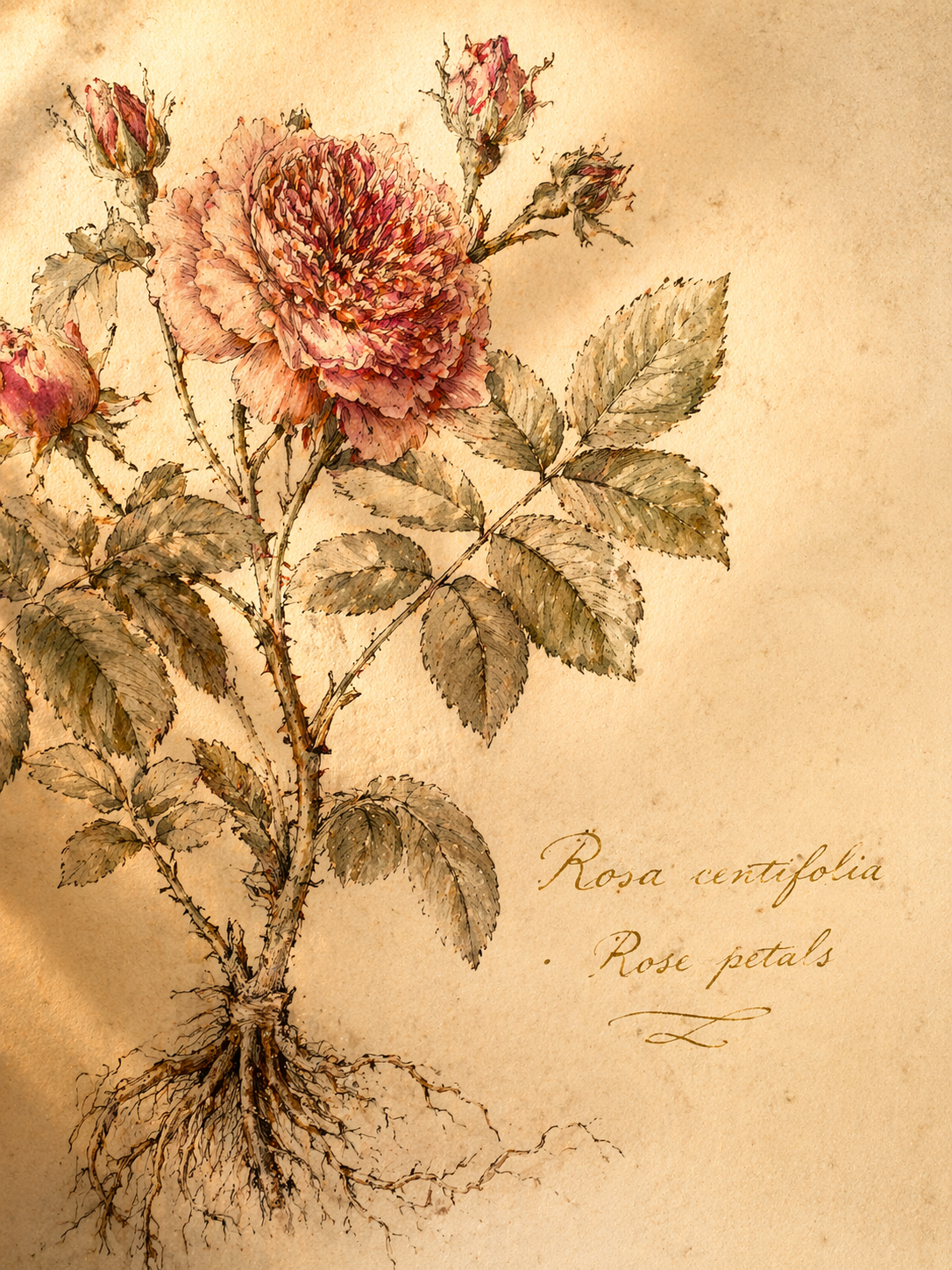
Rosa centifolia — Rose petals botanical illustration

Rosa centifolia

Rose petals

The flower that remembers. Used in Persian medicine, Ottoman baths, French perfumeries for longer than most civilisations have existed. In this house it arrives last — in the blooming — because it gives everything at once and cannot be rushed.

In the nineteenth century, French pharmacists placed the Apothecary’s Rose at the entrance of their shops. It became the professional symbol of the pharmaceutical trade.
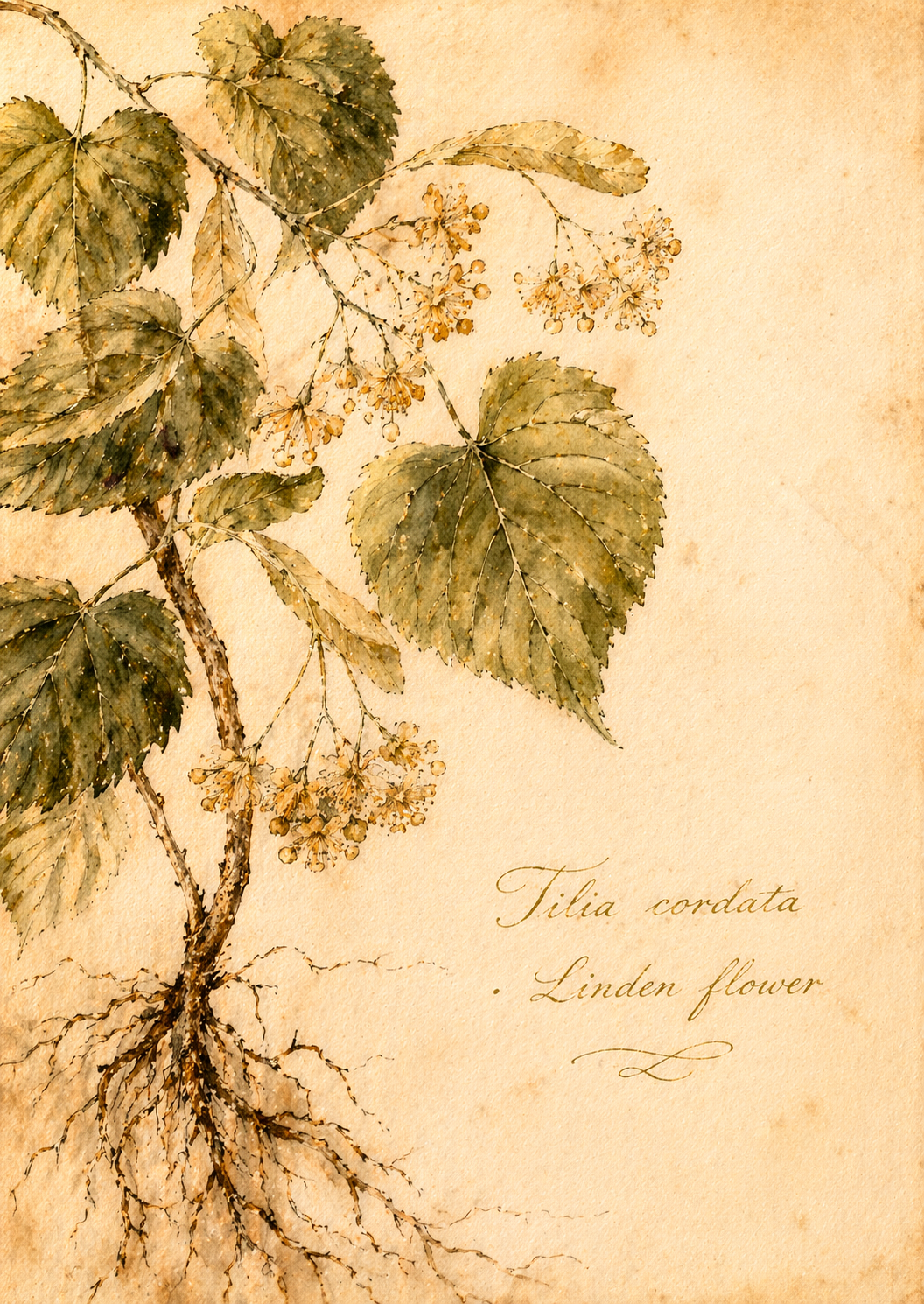
Tilia cordata — Linden flower botanical illustration

Tilia cordata

Linden flower

The tree in every town square. Everyone rested beneath it. The nervous system recognises something in the linden. It slows — not from sedation, but from recognition.

St Thomas’ Hospital Pharmacopoeia, London, 1772 — prescribed for nervous exhaustion. The condition of those who think too much and rest too little.
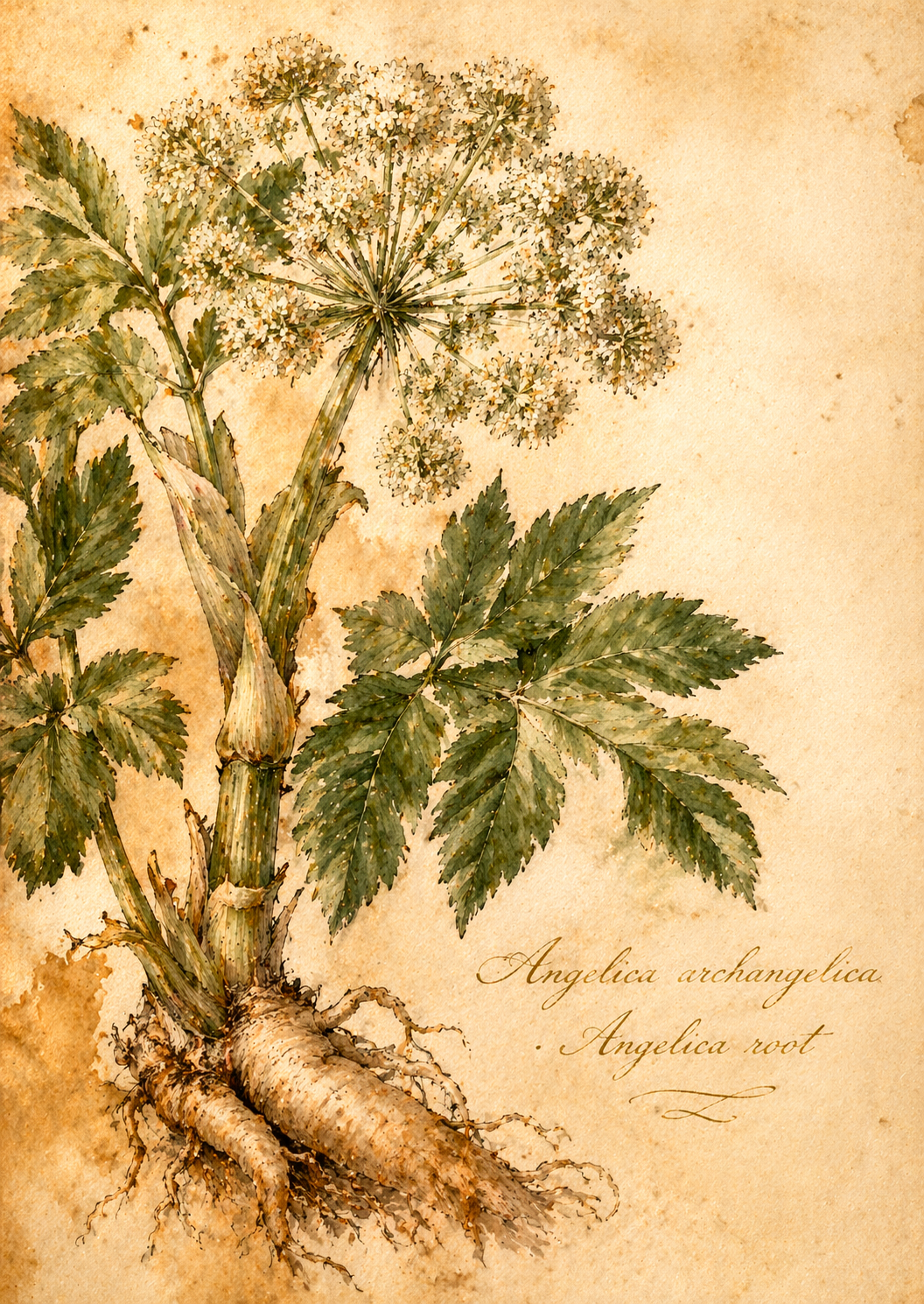
Angelica archangelica — Angelica root botanical illustration

Angelica archangelica

Angelica root

The plant that stands at thresholds. Named for the archangel. It opens what follows — neither here nor there, it is the door itself.

Mrs M. Grieve, A Modern Herbal, 1931 — a sovereign remedy against poisons and infectious maladies. Revealed in a dream by an angel to cure the plague.
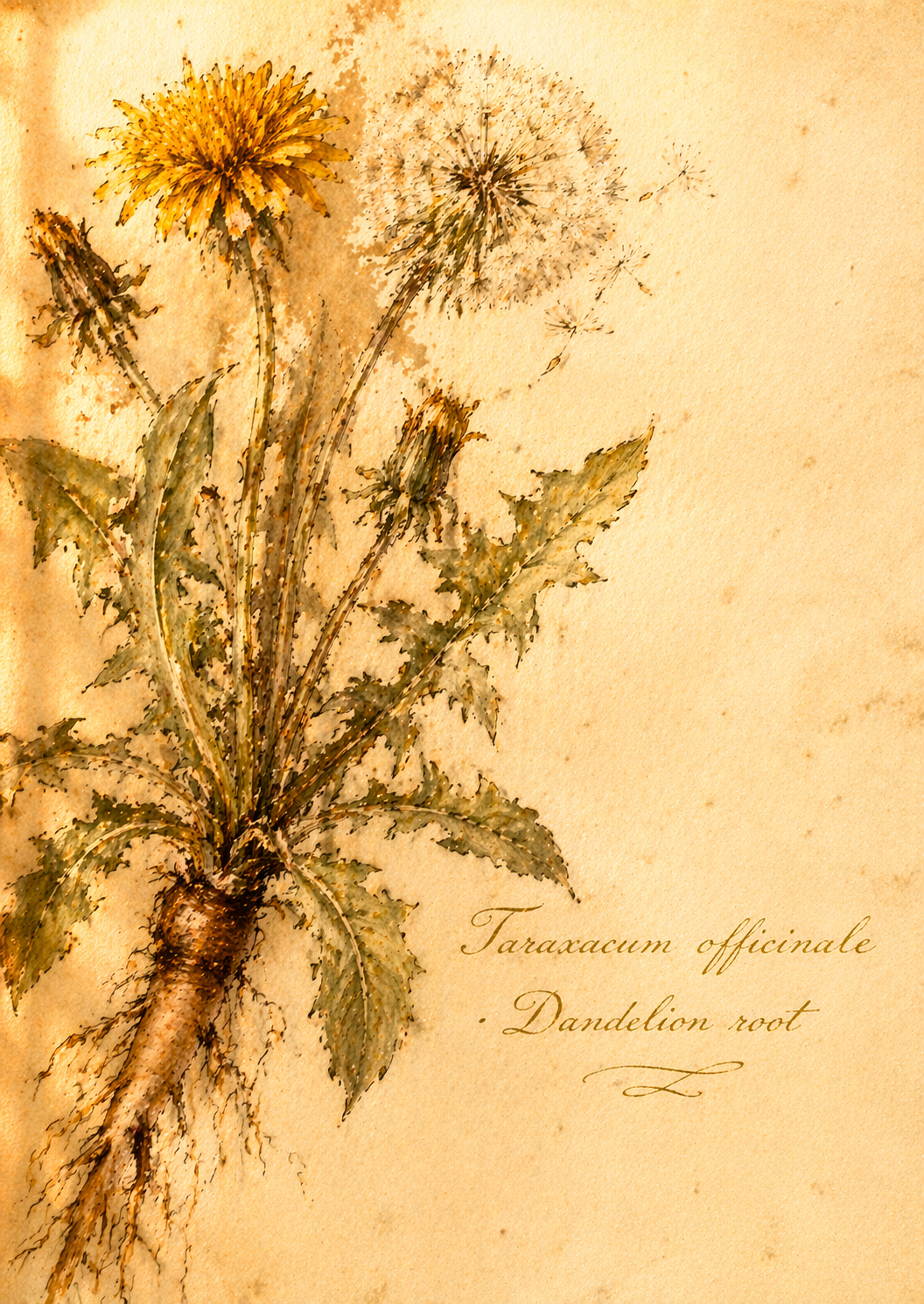
Taraxacum officinale — Dandelion root botanical illustration

Taraxacum officinale

Dandelion root

What the garden forgets. What the body remembers. It detoxifies, supports the liver, clears what accumulated during the day. Not glamorous. Essential.

St Thomas’ Hospital, London, 1835 — one pint of the decoction of taraxacum daily, prescribed for dropsy.
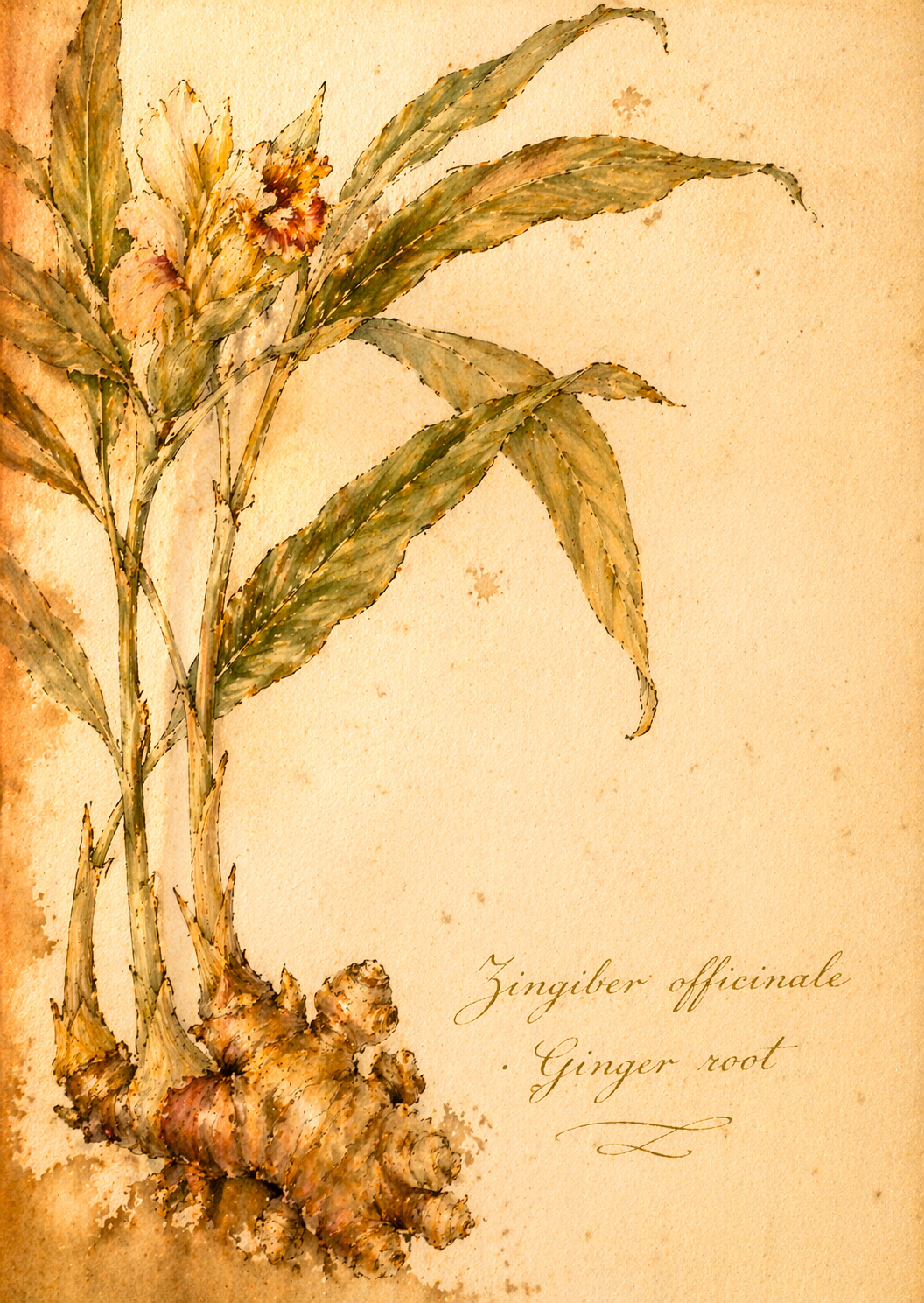
Zingiber officinale — Ginger root botanical illustration

Zingiber officinale

Ginger root

The oldest warmth. Before spice routes were mapped, ginger was already moving between cultures. In this house it enters first because it opens everything else.

Nicholas Culpeper, The Complete Herbal, 1653 — Ginger is profitable for the stomach.
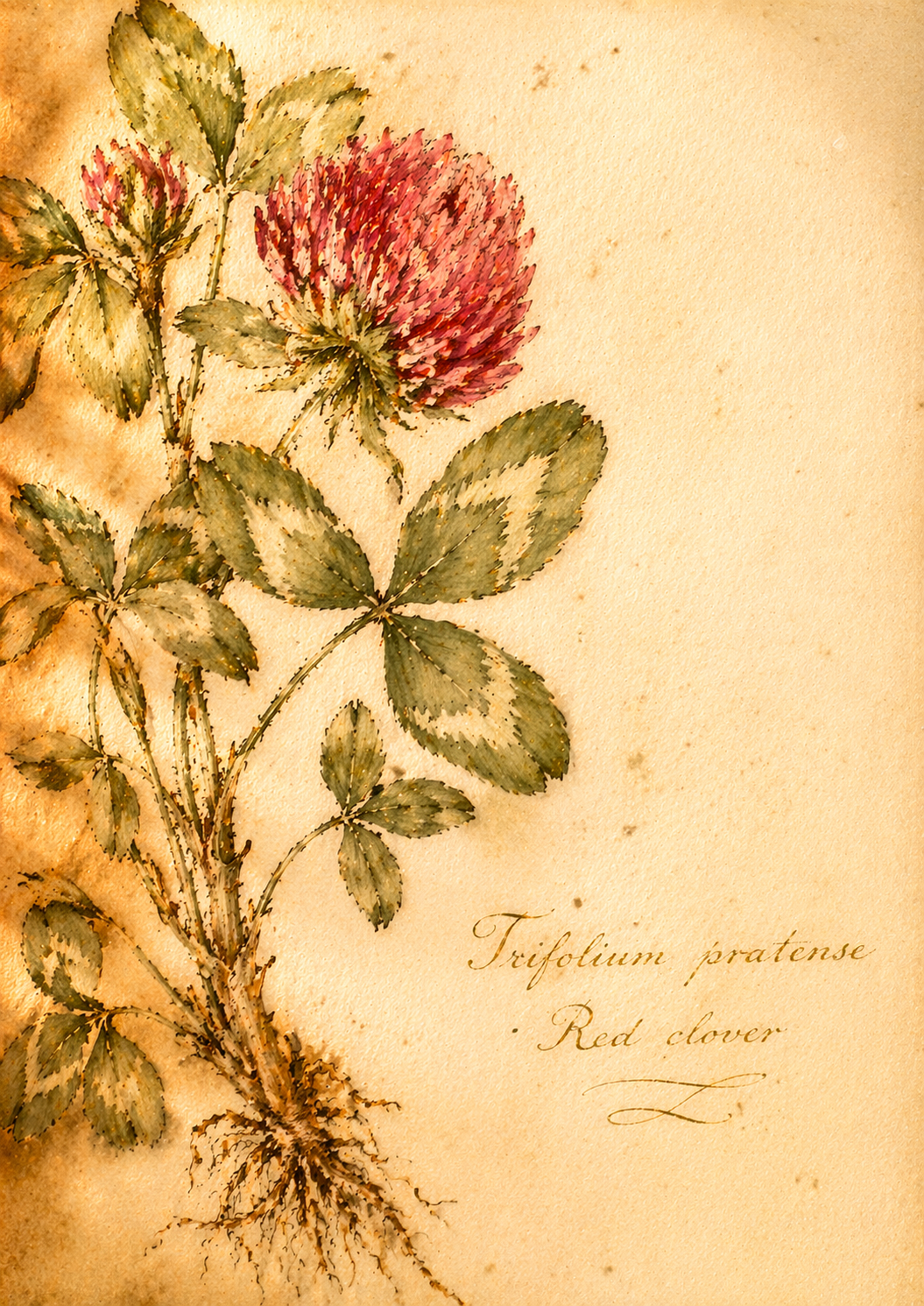
Trifolium pratense — Red clover botanical illustration

Trifolium pratense

Red clover

The field’s quiet medicine. Phytoestrogenic, softening, cyclically intelligent. Not dramatic in its action. Steady. The kind of support only noticed in its absence.

Victorian European herbals — a specific remedy for female troubles. The simple, unacknowledged difficulty of being a woman in the nineteenth century.
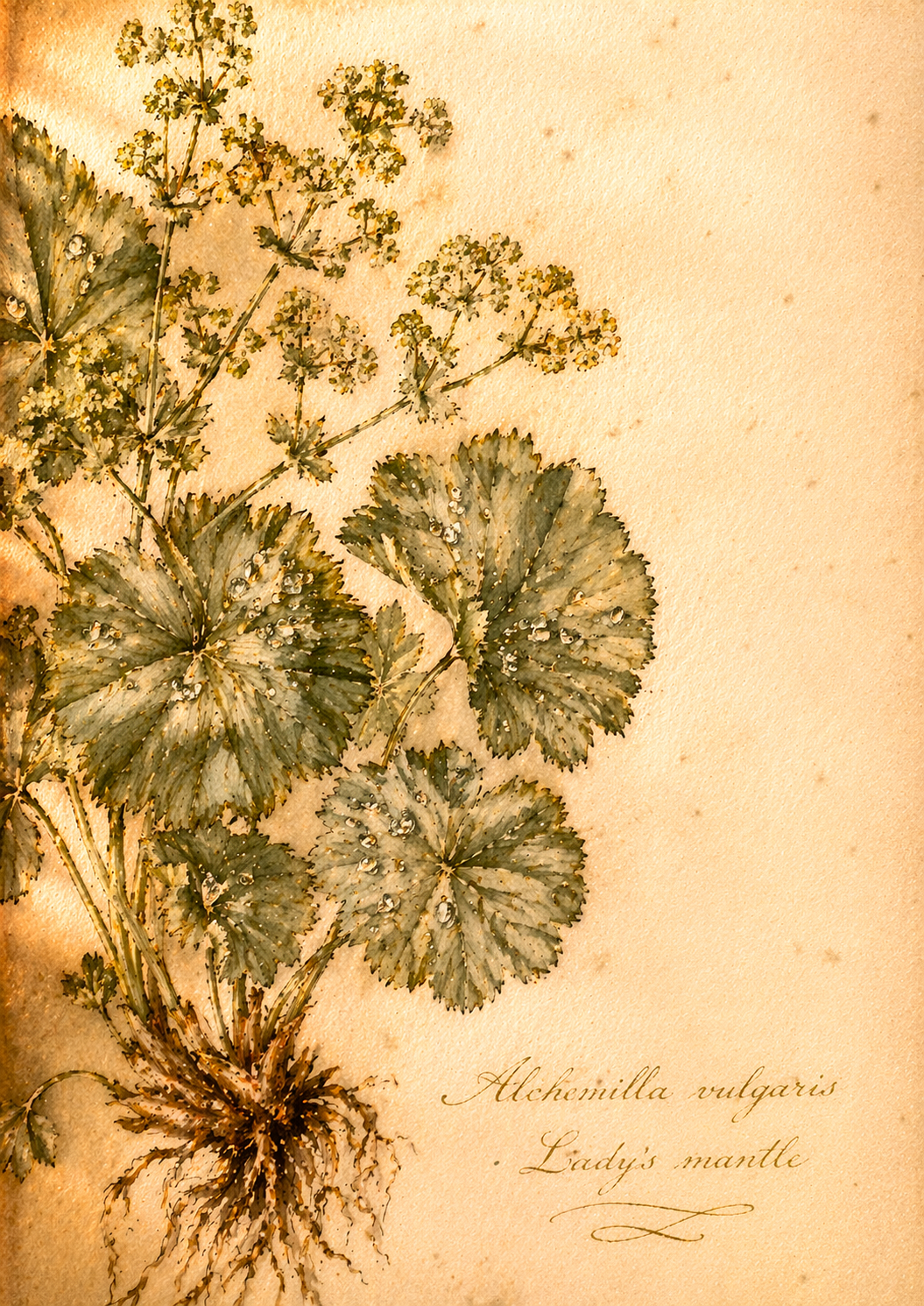
Alchemilla vulgaris — Lady's mantle botanical illustration

Alchemilla vulgaris

Lady’s mantle

Alchemilla — little alchemist. The dew that collects in the leaves was prized by medieval herbalists as the purest water on earth. It tones. It supports. It stays.

Culpeper, The Complete Herbal — Lady’s mantle hath been used to cure excessive menstruation.
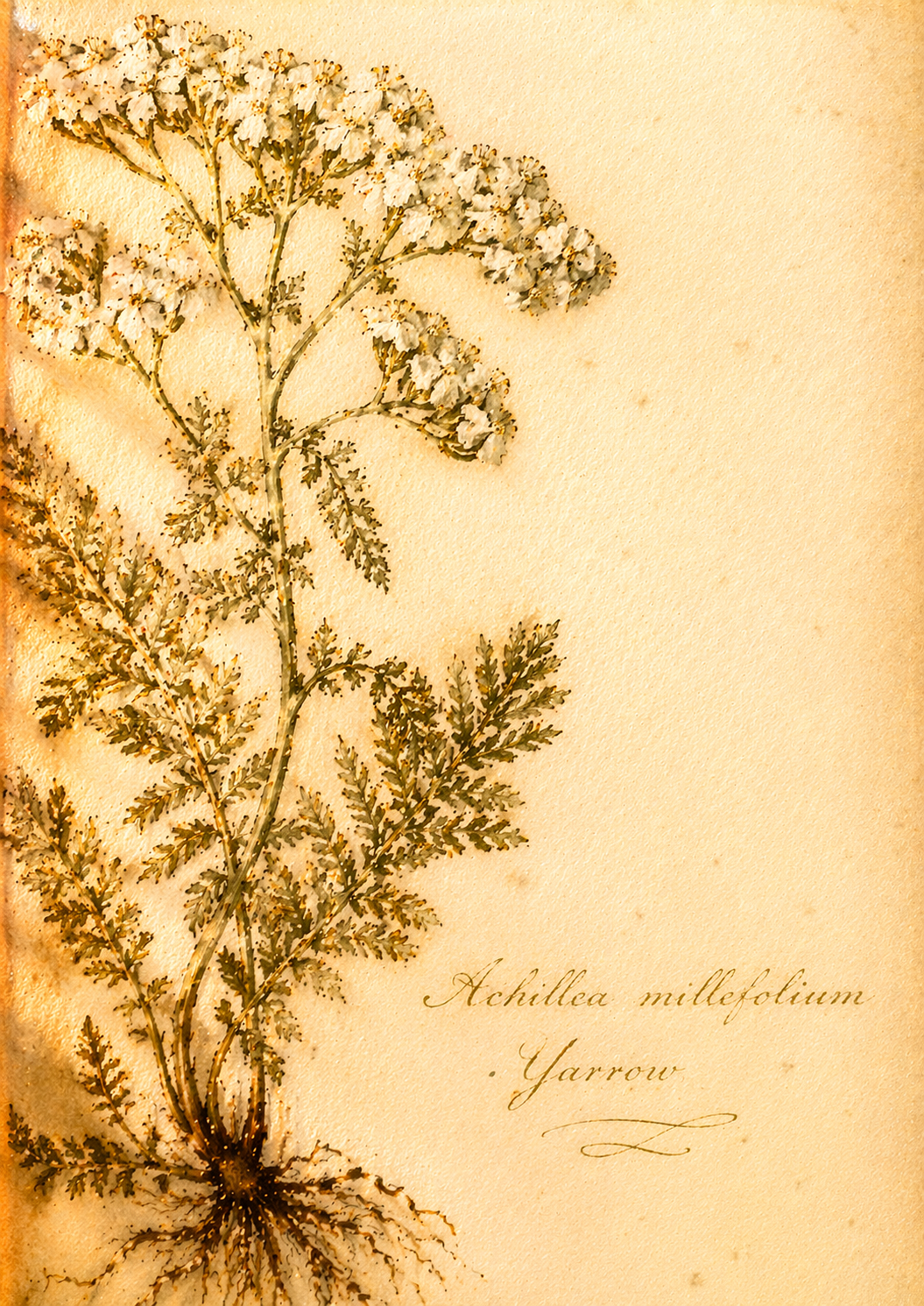
Achillea millefolium — Yarrow botanical illustration

Achillea millefolium

Yarrow

What the field remembers of every battle fought across it. Named for Achilles. Present in European medicine for over sixty thousand years.

Found in Neanderthal burial sites alongside other medicinal plants — used without interruption for longer than writing has existed.
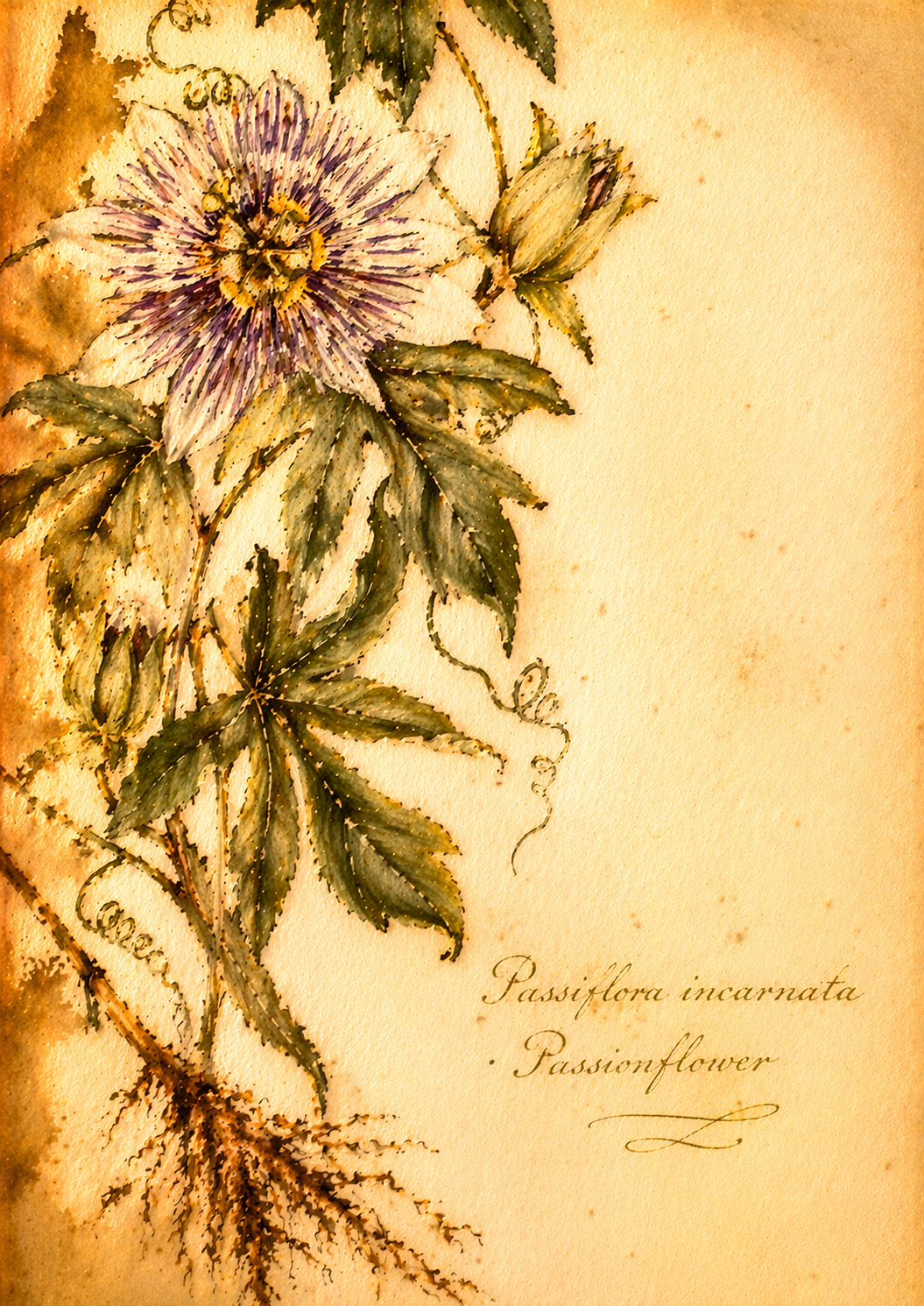
Passiflora incarnata — Passionflower botanical illustration

Passiflora incarnata

Passionflower

The nervous system’s quiet companion. Victorian herbalists prescribed it for the particular depletion of someone who thinks too much and rests too little. Nothing has changed.

Victorian patent medicines — prescribed for nervous prostration. The nineteenth century’s polite term for what we would now call burnout.
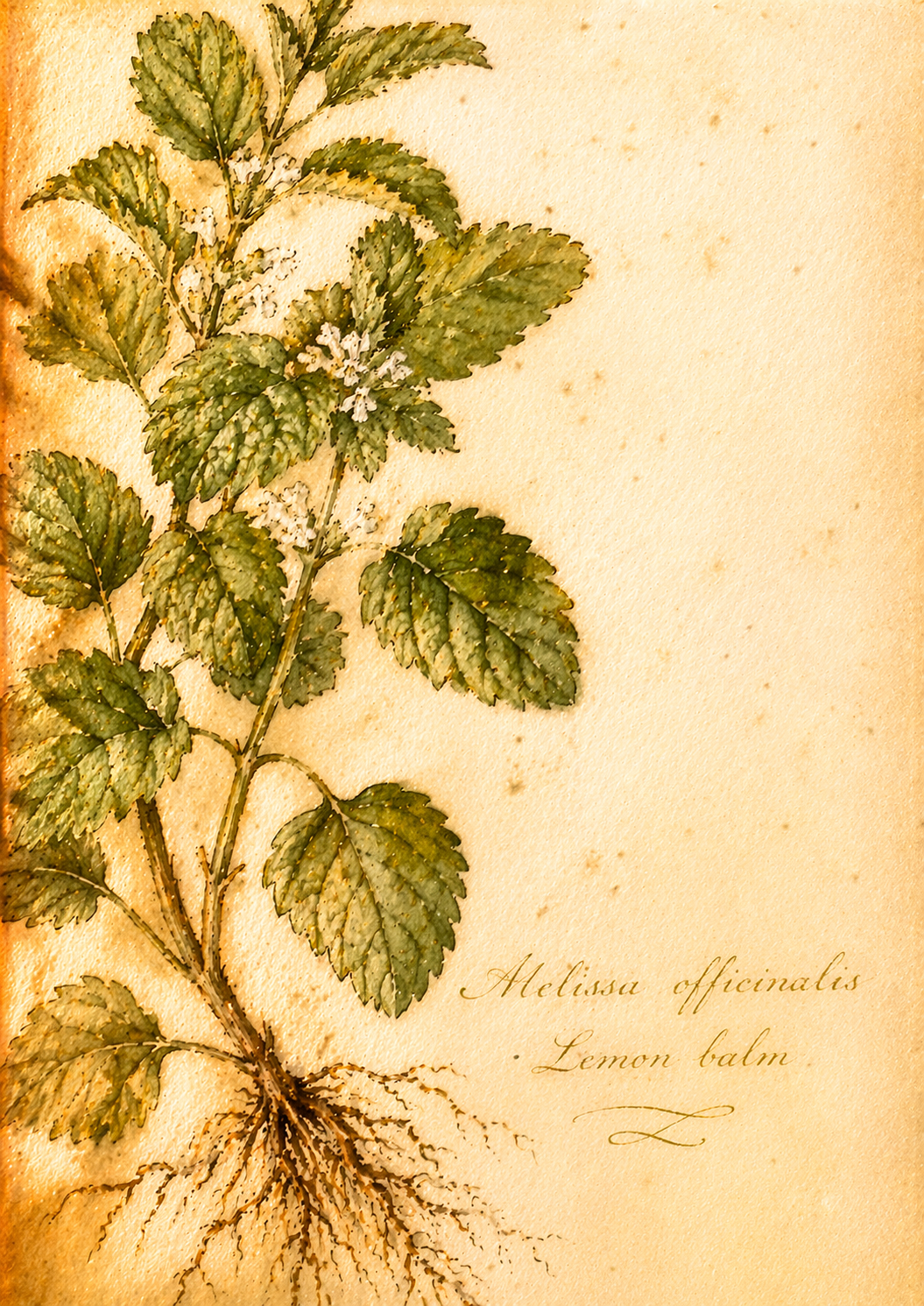
Melissa officinalis — Lemon balm botanical illustration

Melissa officinalis

Lemon balm

The bees’ herb. Calms without dulling. Lifts without stimulating. The rare ingredient that does not trade one problem for another.

Paracelsus, sixteenth century — lemon balm is the elixir of life.
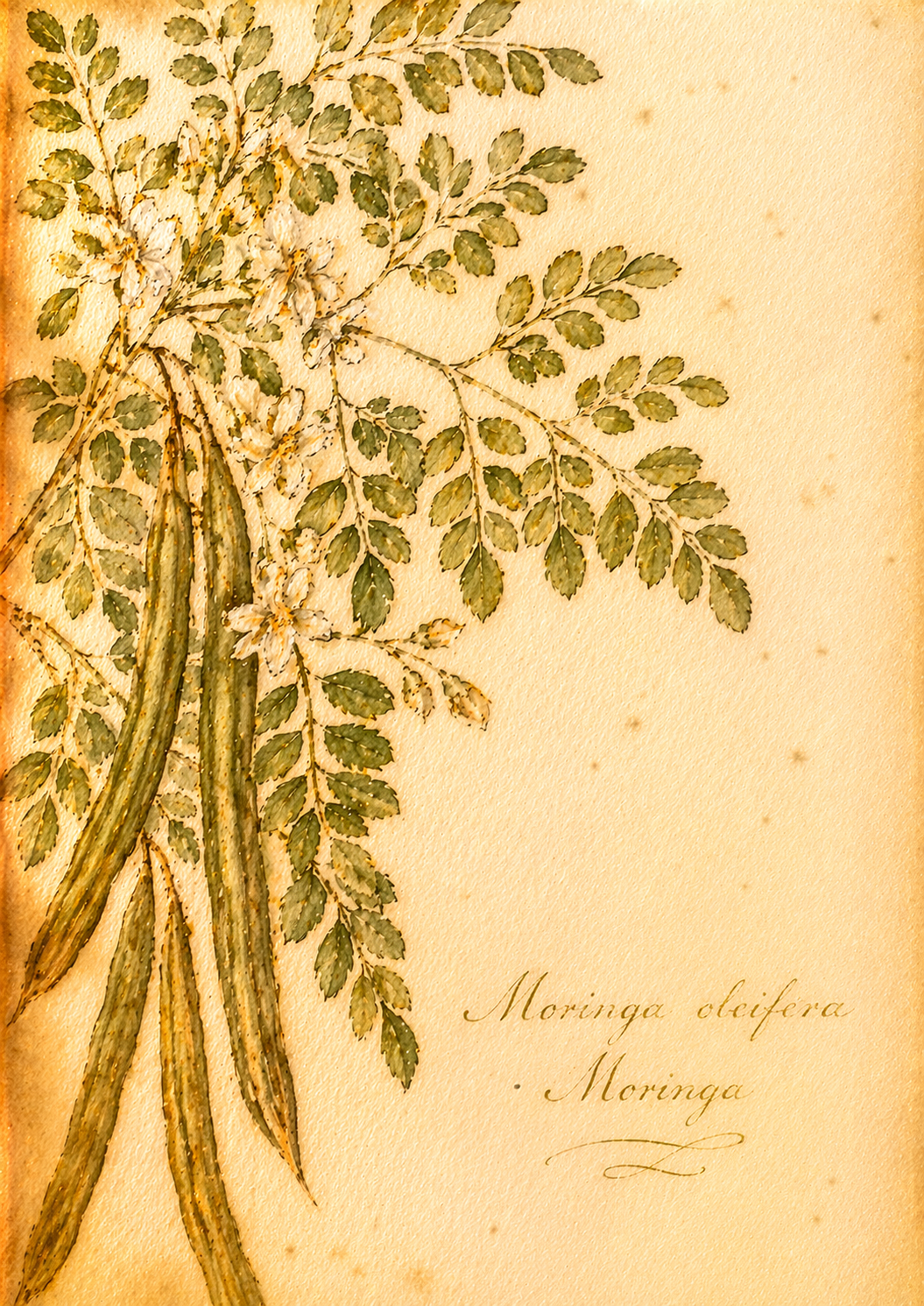
Moringa oleifera — Moringa botanical illustration

Moringa oleifera

Moringa

The tree of life. Every part used. Nothing wasted. It belongs here — working underneath the florals, quietly, doing the things that cannot be seen.

Documented by European colonial botanists in the seventeenth century with consistent surprise — that a plant of such nutritional complexity had been known for millennia before European contact.
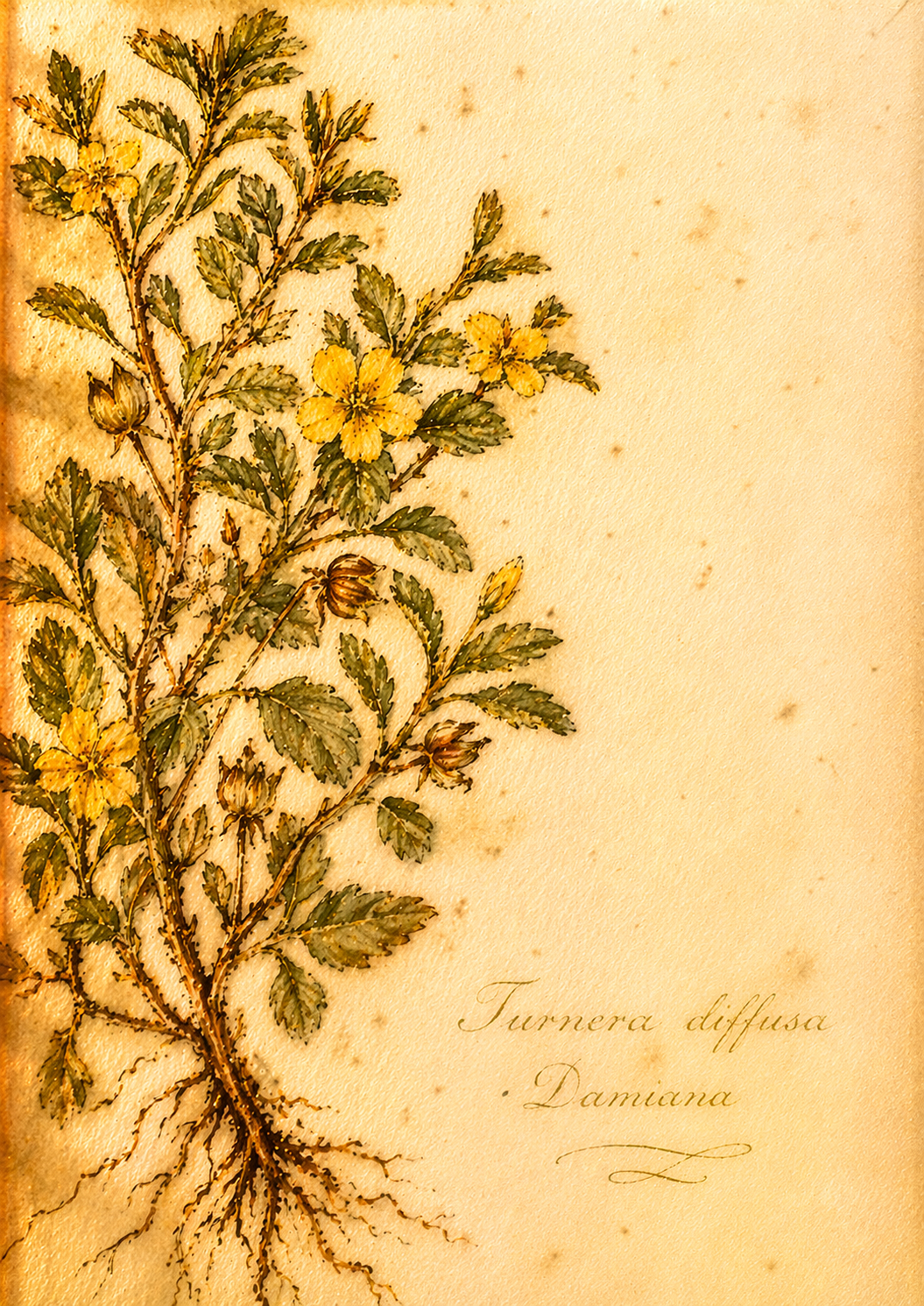
Turnera diffusa — Damiana botanical illustration

Turnera diffusa

Damiana

From the hot dry landscapes of Central America. Used for mood, for energy, for what the body needs when it has given too much. A subtle lifter — present but never aggressive.

Late Victorian botanical catalogues — used by native peoples of Mexico for fatigue and nervous debility.
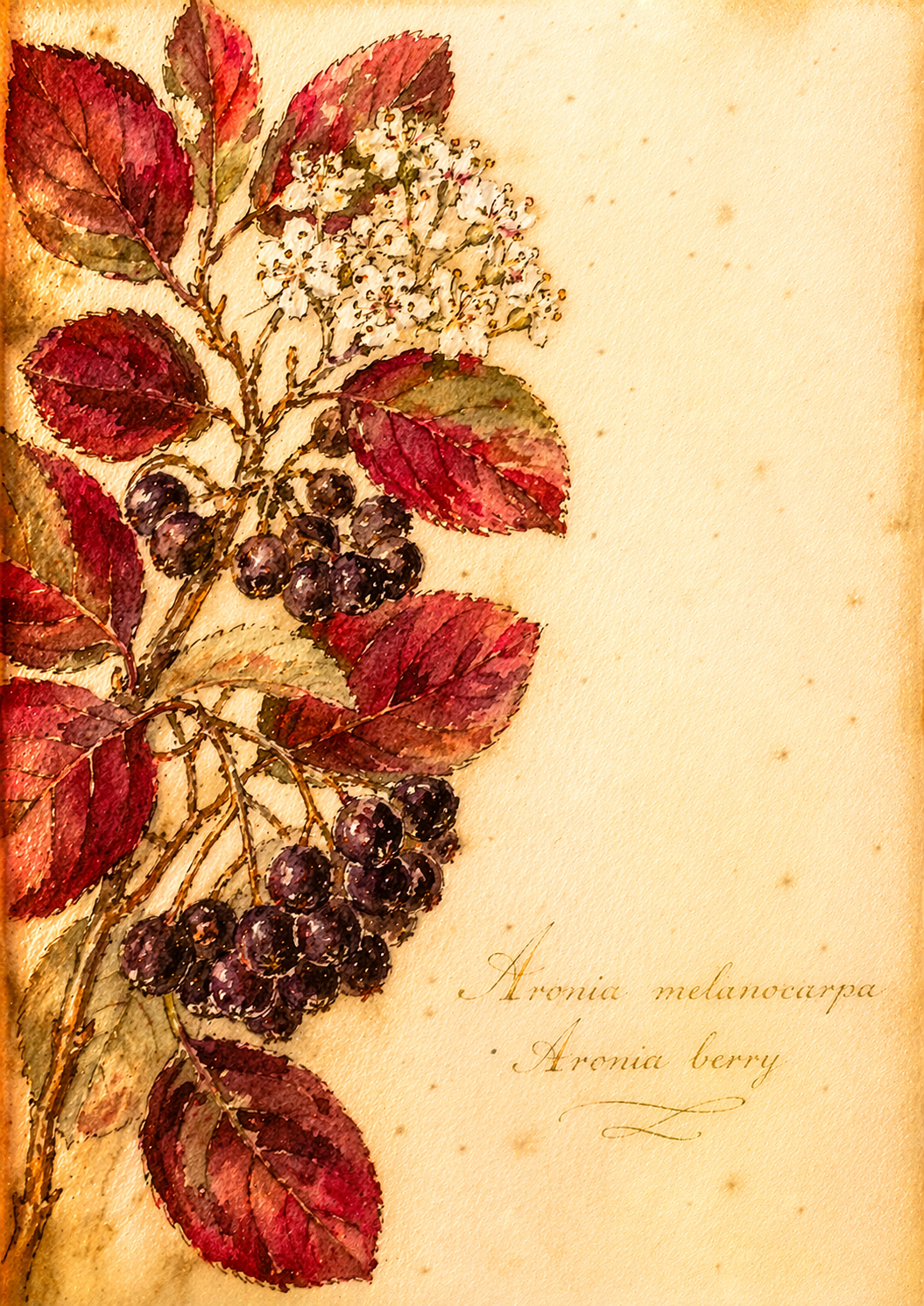
Aronia melanocarpa — Aronia berry botanical illustration

Aronia melanocarpa

Aronia berry

The darkest berry. Deep antioxidant capacity, slightly tart, deeply restorative. It does not announce itself. It simply makes everything around it more complete.

Eastern European folk medicine — confirmed by Polish and Czech research in the mid-twentieth century, validating what village healers had known for generations.
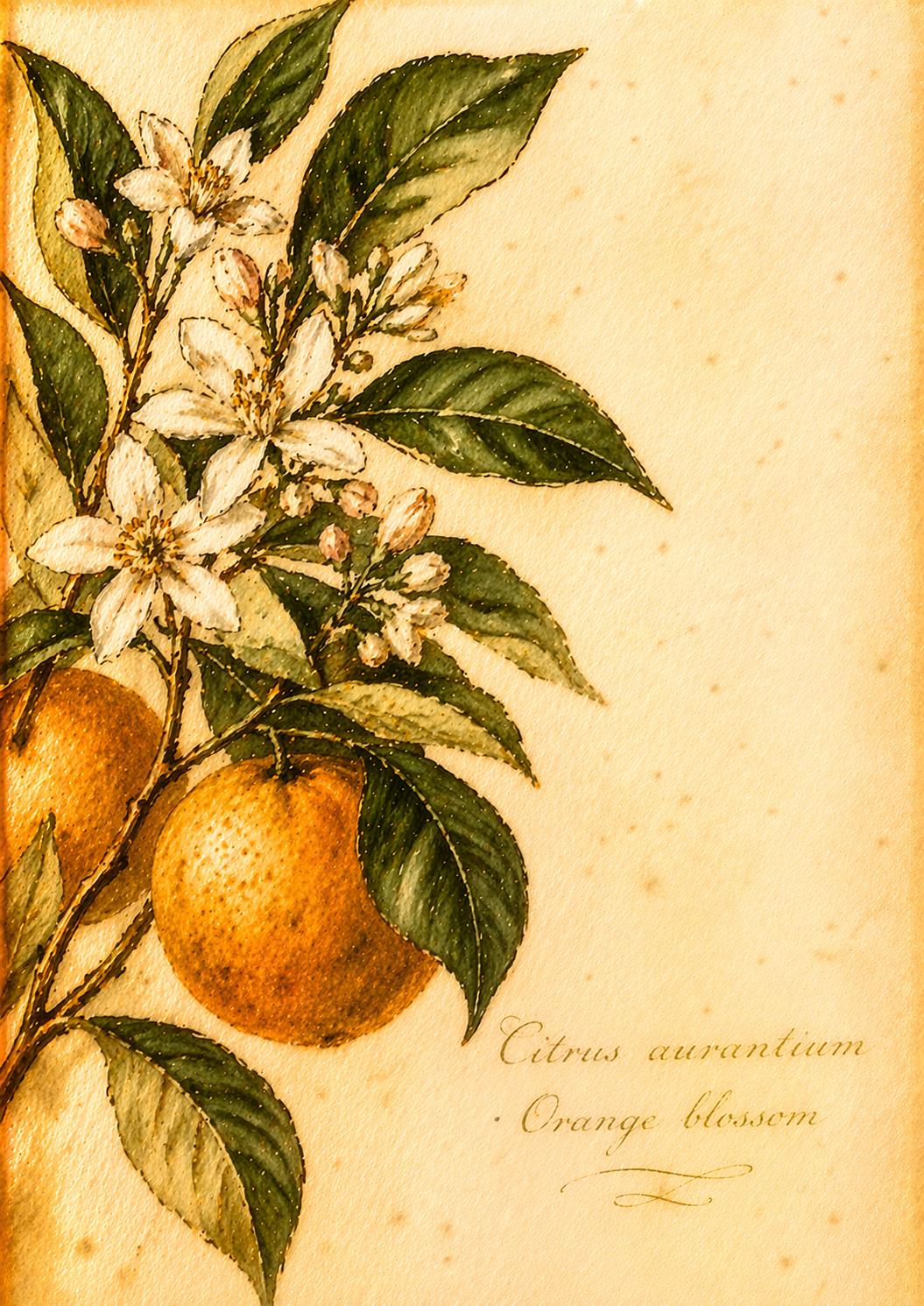
Citrus aurantium — Orange blossom botanical illustration

Citrus aurantium

Orange blossom

Not the fruit. The flower. Most volatile of all — which is why it arrives last, below fifty degrees. Added cold, it preserves everything. The brew becomes complete.

French pharmacopoeias, eighteenth century — eau de fleur d’oranger, prescribed for palpitations and nervous agitation.

Brewed in Amsterdam

Every infusion in this collection is brewed by hand in Amsterdam in four stages. The ingredients are real. The method is real. The rest, your body already knows.